
Why Food Poisoning Spikes During Monsoon — And How to Protect Yourself
There’s something about the rains that makes us crave hot chai, pakoras, samosas, and spicy street food. But that tempting plate can sometimes come with an unwanted side effect. The rain itself isn’t the cause — humidity, contaminated water, and food-handling challenges are. Here’s how to enjoy the season while keeping food safety part of the recipe.
The Real Cause
Not Rain
Humidity & unsafe water
Biggest Risk
Dehydration
Especially with vomiting
Home Rules
5 Basics
Clean, cook, chill & more
Street Food
Choose Smart
Fresh, hot & covered




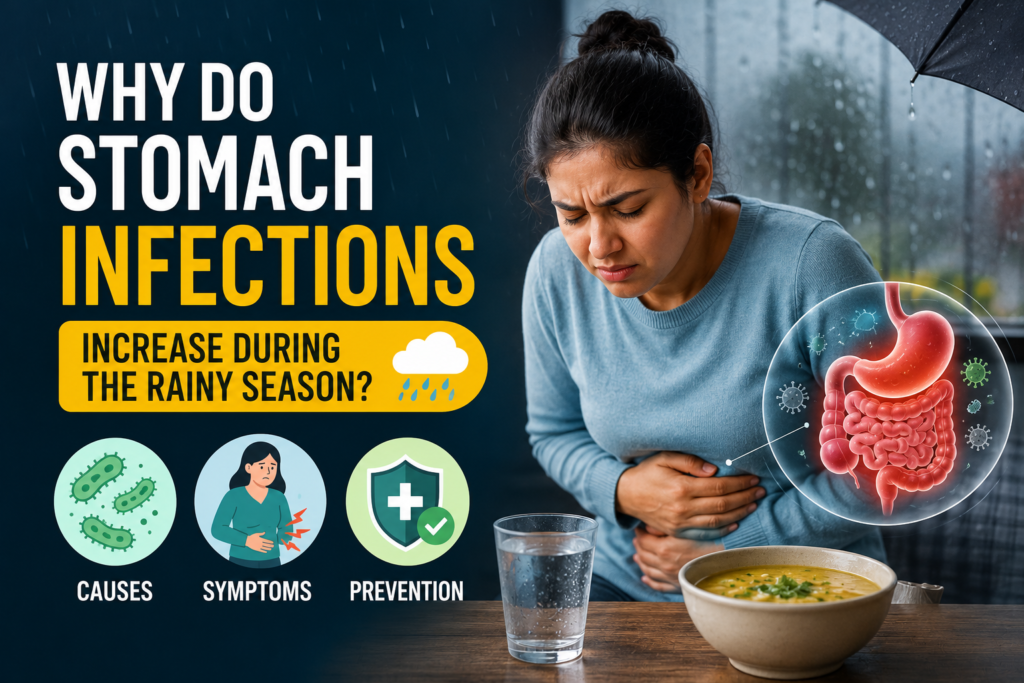
You eat something outside, feel perfectly fine at first, and then a few hours later — stomach cramps, nausea, vomiting, or repeated trips to the bathroom. So why does food poisoning seem more common during monsoon? The rain itself doesn’t cause it. Instead, the combination of humidity, contaminated water, poor food handling, improper storage, and increased microbial growth creates more opportunities for food to become unsafe.
The good news? A few simple habits can significantly reduce your risk — without giving up your favourite monsoon foods.
ℹ️ Note: This article is general health information, not medical advice or a diagnosis. If symptoms are severe or persistent — or affect a young child, older adult, pregnant person, or someone with a health condition — please consult a qualified healthcare professional.
Why Does Food Poisoning Increase During Monsoon?
Monsoon changes our environment — and those changes can affect food safety in five key ways.
Humidity Encourages Microbes
Warm, humid conditions help microorganisms multiply, especially when perishable food isn’t stored properly. Food left out too long can become unsafe even if it looks and smells normal.
Water Contamination
Heavy rain and flooding affect water quality and sanitation. Contaminated water can introduce harmful microorganisms into food, beverages, ice, and cooking — especially when eating out.
Street-Food Hygiene Challenges
Street food isn’t automatically unsafe, but vendors face rainwater, damp surroundings, crowding, and difficulty keeping food at safe temperatures during the rains.
Improper Storage
Perishables need temperature control. That leftover curry sitting on the counter all afternoon? If refrigeration is inadequate, harmful microorganisms can multiply.
Cross-Contamination
Sometimes it’s not the food but the handling. Raw vegetables, meat, or eggs can transfer microorganisms to cooked food via hands, chopping boards, knives, or surfaces.
What Exactly Is Food Poisoning?
Food poisoning is an illness caused by consuming food or beverages contaminated with harmful bacteria, viruses, parasites, or toxins. Different causes produce different symptoms, and severity ranges from mild discomfort to serious illness needing medical care.
🩹 Food poisoning vs. “stomach flu”: Not the same. “Stomach flu” usually means viral gastroenteritis (a viral infection of the digestive system). Food poisoning can come from bacteria, viruses, parasites, or toxins in contaminated food or water. Symptoms overlap, so identifying the exact cause from symptoms alone isn’t always possible.
Common Symptoms & the Dehydration Risk
Symptoms vary by cause, but common ones include:
- Nausea • vomiting • diarrhoea
- Abdominal cramps • stomach pain
- Fever • weakness
Note: not every episode of diarrhoea or vomiting is food poisoning — viral gastroenteritis and other infections can cause similar symptoms.
⚠️ Dehydration is the biggest concern — especially when vomiting and diarrhoea occur together. Watch for: very little urine, dark-coloured urine, dry mouth, excessive thirst, dizziness, weakness, or (in severe cases) confusion. ORS helps replace lost fluids and electrolytes. If you can’t keep fluids down or symptoms are severe, seek medical care.
7 Foods & Drinks to Be Extra Careful With
You don’t have to give up your favourites — but these deserve extra attention when hygiene or storage is uncertain. Each card shows a safer choice.
Cut Fruits Sold Outdoors
Exposed once peeled
Better at Home
Uncovered Street Food
Open to the elements
Fresh & Hot
Raw Salads (Unknown Source)
No cooking step
Know the Source
Room-Temp Chutneys & Sauces
Stored improperly
Keep Chilled
Unsafe Dairy Products
Unpasteurized / warm
Pasteurized
Undercooked Meat, Eggs, Seafood
Raw animal foods
Cook Well
Ice & Beverages (Uncertain)
Unknown water source
Safe Water Only
Is Street Food Completely Unsafe During Monsoon?
No — saying “never eat street food” is too simplistic. Instead, become a smarter consumer. Sometimes the environment around the food tells you more than the menu does.
| ✅ Good Signs — Go Ahead | ⚠️ Warning Signs — Be Cautious |
|---|---|
| Food cooked fresh and served hot | Food exposed to rain, dust, or insects |
| Clean utensils and prep surfaces | Uncovered ingredients |
| Ingredients kept covered | Dirty utensils |
| Safe-looking water practices | Questionable water or ice |
| Good hand hygiene & high turnover | Food sitting out at room temperature |
| Food that isn’t sitting around | Poor personal hygiene among handlers |
How to Prevent Food Poisoning at Home
Food safety starts in your own kitchen. Remember these five basic principles.
1. Clean
Wash hands before preparing or eating food. Keep kitchen surfaces and utensils clean.
2. Separate
Keep raw and cooked foods apart to reduce cross-contamination.
3. Cook
Cook food thoroughly — particularly meat, poultry, eggs, and seafood.
4. Chill
Refrigerate perishables promptly; don’t leave cooked food out unnecessarily.
5. Use Safe Water
Use safe drinking water for cooking, washing food, and preparing beverages.
What Should You Eat If You Have Food Poisoning?
If you’re vomiting or have diarrhoea, hydration comes first — you lose both fluids and electrolytes. You don’t need to starve yourself; once your appetite returns, gradually resume normal foods as tolerated. Consider:
- ORS and safe drinking water
- Rice or soft rice-based foods, and khichdi
- Bananas
- Toast or other simple foods as tolerated
- Light soups
🥨 What about curd? Some people tolerate it, but dairy may temporarily worsen symptoms for others. There’s no need to force it if it doesn’t suit you — and if a particular food makes symptoms worse, avoid it temporarily.
When Should You See a Doctor?
Most mild cases improve with supportive care, but food poisoning shouldn’t always be managed at home. Seek medical attention if you experience:
• Blood in the stool
• Persistent vomiting
• Severe dehydration
• High or persistent fever
• Severe abdominal pain
• Confusion or extreme weakness
• Symptoms that aren’t improving
Extra caution for young children, older adults, pregnant people, and those with underlying health conditions — they may be more vulnerable to complications.
🩹 Don’t automatically reach for antibiotics. Not every foodborne illness is bacterial, and antibiotics aren’t right for every case. Let a healthcare professional decide whether they’re necessary.
Food Poisoning Myths vs. Facts
| Myth | Fact |
|---|---|
| Spicy food kills harmful bacteria. | Spices aren’t a substitute for safe handling, proper cooking, and clean water. |
| If food smells fine, it’s safe. | Harmful microorganisms may not change the smell, taste, or appearance of food. |
| Stop eating completely when sick. | Hydration is essential; once tolerated, small amounts of simple foods can be introduced. |
| Antibiotics are needed every time. | Many foodborne illnesses don’t require antibiotics — it depends on cause and severity. |
| Monsoon means avoid all street food. | The real issue is hygiene — fresh food from a clean vendor beats poorly handled food anywhere. |
Your Monsoon Food Safety Checklist
Before you take that first bite, ask yourself:
- Is the food freshly prepared?
- Is it served hot?
- Are the ingredients covered?
- Are the utensils clean?
- Is the water safe?
- Has the food been stored properly?
- Is the vendor maintaining basic hygiene?
- Would I feel comfortable eating this if it weren’t raining?
If you’re unsure about several of these, it’s probably better to choose another option.
The Bottom Line
Monsoon doesn’t mean giving up your favourite foods — it means paying a little more attention to hygiene, water safety, storage, and preparation. Humidity, contaminated water, improper handling, and inadequate refrigeration can raise the risk, but simple precautions go a long way. And if food poisoning does happen, don’t ignore dehydration or serious symptoms. This monsoon, enjoy your chai, pakoras, and favourite foods — just make food safety part of the recipe.
Quick FAQs
The rainy season can increase food-safety risks because of humidity, water contamination, sanitation challenges, and improper food storage.
Common symptoms include nausea, vomiting, diarrhoea, abdominal cramps, and sometimes fever.
You don’t necessarily need to avoid it completely. Choose vendors who maintain good hygiene, serve freshly cooked food hot, and use safe water.
ORS and safe drinking water are important, particularly when vomiting or diarrhoea causes fluid loss.
Follow basic food-safety practices: clean, separate raw and cooked foods, cook thoroughly, refrigerate perishables promptly, and use safe water.